The term "ISO consultant" gets used fairly loosely across the UAE market, and companies that are seeking certification for the very first time usually aren't sure what they're getting in the event they hire one. Knowing the true scope of the job helps establish reasonable expectations and makes it easier to assess whether a consultant is offering genuine value.Translating the Standard Into Practical Business Terms
ISO requirements are formulated in a formal, generalised and written language intended to be applicable across many sectors, so a substantial portion of a consultant's job involves translating those requirements into the meaning they have for a specific company's daily processes. A skilled consultant spends time analyzing how a company operates before suggesting how their current processes are mapped onto the standards' requirements.
In conducting the Initial Gap Assessment
Most projects begin with a planned gap assessment, whereby we compare current practices with the applicable standard's requirements to identify how things are currently operating, what has to be modified, and the ones that are not working. This assessment shapes the entire timeframe and budget for implementation, that's why a thorough gap analysis that is honest and truthful more than an optimistic one which undervalues the effort involved.
Aiding to Build or Refine Management System Documentation
When gaps are discovered, consultants generally assist in establishing or improve the documented procedures, policies and documents needed in order to demonstrate compliance. modern standards insist on real conformity to processes over paper volume. The best consultants defend against excessive documentation for the sake of documentation preferring a system that the company actually uses over one designed solely to meet an auditor's criteria.
Training staff on new or revised processes
Implementation isn't an only management-level activity, since staff on every level usually need to be aware of what's changing throughout their daily routine and the reasons behind it. Consultants frequently conduct workshops to help build this understanding, since a management system that's only in writing without real staff buy-in tends to unravel quickly when the initial pressure for certification is gone.
Conducting Internal Audits prior to the Actual Thing
Most standards require at a minimum an internal audit prior to the external certification audit occurs The consultants will typically perform this themselves or train internal employees to do it. Internal audits are a genuine dry run, uncovering issues when there's the opportunity to address them rather then identifying the issue for the first time in front of any external auditor.
The Business Supporting External Audit
Although consultants aren't present on a business's behalf during any certification process due to the requirement for independence good consultants are able to prepare businesses extensively prior to the audit and are often on hand to interpret and resolve any issues the auditor's report identifies.
What a consultant should not Be Doing
A properly-run consultant should not be the same person giving the certificate since such a arrangement could compromise its independence, which the whole system has to rely on. Any consultant offering to both create your management system and then certify it under the identical roof is a concern to consider rather than a convenient shortcut.
Aiding in Interpretation Standard Updates and Revisions
ISO standards are regularly revised and a skilled consultant will keep clients informed of forthcoming changes before they become mandatory, allowing businesses the opportunity to adjust instead of scrambling to make changes at the last minute. This advisory function often will continue well after the initial certification project especially for firms that engage a consultant on lighter ongoing basis for ongoing monitoring audit support.
Adapting the Approach to Business Size
An experienced consultant scales their approach in a way that is appropriate to the situation, whether it's a five-person business or a 5,000-person business, as a control strategy that's appropriately proportional to business size and complexity is far more likely to remain in place successfully than one based off an even larger scale of requirements. Don't fall for a generic template that is being used regardless of your company's actual size.
Development of internal capability, not Just Dependency
The best consultants want to leave a company more self-sufficient than they entered it, creating internal staff members who can eventually take charge of the system independently, instead of forming an ongoing dependency solely to support their own continuing billing. If you ask a potential consultant directly how they go about internal capability creation is a fair way to gauge whether they're committed to long-term client success.
A Practical Timeline for Engaging as a Consultant
They often do not know when in the certification journey the consultant should be engaged, often seeking out consultants only when an unavoidable deadline is on the horizon. Engaging an expert early enough to conduct a real gap analysis, instead of hurrying implementation under pressure to meet deadlines can result in a stronger and more sustainable management process as opposed to a rush, deadline-driven engagement.
Recognising When You've Outgrown the requirements for a consultant
Certain UAE firms, especially larger ones that have dedicated quality or compliance personnel are eventually at a stage in which they can conduct ongoing inspections of surveillance and even standard transitions largely on their own, employing a consultant only for occasional specialist input. Being aware of this shift instead of continuing to pay for all consultant support indefinitely, reflects the maturation of management systems that has genuinely become part of how a business operates.
If properly understood, an ISO advisor in the UAE operates less as a vendor of paperwork and more like a temporary addition to the management team. They guide an organization through a real operation shift instead of producing documents to satisfy an external demand. Selecting the right consultant and knowing what their role ought to and shouldn't include, will make the distinction between a certificate project that truly improves the way a business operates and one that only issues a cert without any long-term operational change behind it. The fact that this is the case doesn't mean the job of a consultant any less valuable, however this does suggest that businesses think of the relationship as a real partnership instead of delegating the entire certification responsibility to another. The change in attitude alone will tend toward a durable and long-lasting certification result. If approached in this manner, the engagement is a real investment, rather than merely another compliance expense. This is a distinction worthy of paying attention to throughout. See the recommended ISO Certification Dubai for site tips.
ISO 45001 vs ISO 22000 Which One Does Your Business Actually Do You Need?
Businesses who are still awaiting ISO certification are often led to believe that diverse standards are essentially interchangeable However, the truth is that ISO 45001 and ISO 22000 tackle completely different operational risk and fit very distinct types of companies. Knowing what each one actually is able to discern which one or whether both, genuinely will apply to your operations.What ISO 45001 Covers
ISO 45001 is the international standard for occupational safety and health control systems. They are aimed at identifying workplace hazards, assessing the dangers to employees and people affected by operations, and putting in place a systematic system of control place to reduce the risk of injury and illness. It is applicable to nearly every company with employees and physical operations, but carries particular importance in manufacturing, construction or oil and gas industries, and logistics, where workplace injury risk is inherently higher.
What ISO 22000 Covers
ISO 22000, by contrast ISO 22000 is the global standard for the management of food safety systems, which is based around the detection and management of risks throughout an entire chain from handling raw materials to processing, storage and distribution. It's applicable specifically to businesses who are involved in the food supply chain in some way, including producers, processors packaging companies, as well as food service operators, rather than general businesses.
What is the reason why confusion occurs?
Both standards share a similar organizational structure at a high-level, and both have common language in terms of risk assessment and continuous improvement. They are sold in conjunction through certification bodies offering numerous services. These structural similarities could make them appear like they are more alike than they are, especially when the specifications of each address the exact same category of risk.
A Business may require Both
A food manufacturing company such as this should have both standards instead of making the decision between them. ISO 22000 addresses the safety of the food product however ISO 45001 addresses the safety that the workers producing it. Both risk categories are separate that are a part of one operation. This is why numerous food sector companies in the UAE hold both certifications simultaneously.
In the event that a company clearly is in need of one
A construction company without involvement in the production of food is not a genuine requirement for ISO 22000, just as companies that deal in food distribution with only a small risk of physical exposure to workplace hazards could reasonably prefer ISO 22000 over ISO 45001 at the very least, given the resources available and one risk category is clearly more pressing as compared to another.
The Best Way to Decide If You're Still Unsure
The most effective way to select is to analyze your operation against each standard's objectives rather then deciding upon the competition's standards. If your business handles, processes, or serves food products in any way, ISO 22000 deserves serious evaluation. If your business's operations pose physical hazards for the employees or other visitors no matter what industry, ISO 45001 is worth checking out independently of aspects of food safety.
The certification process for both is a similar process
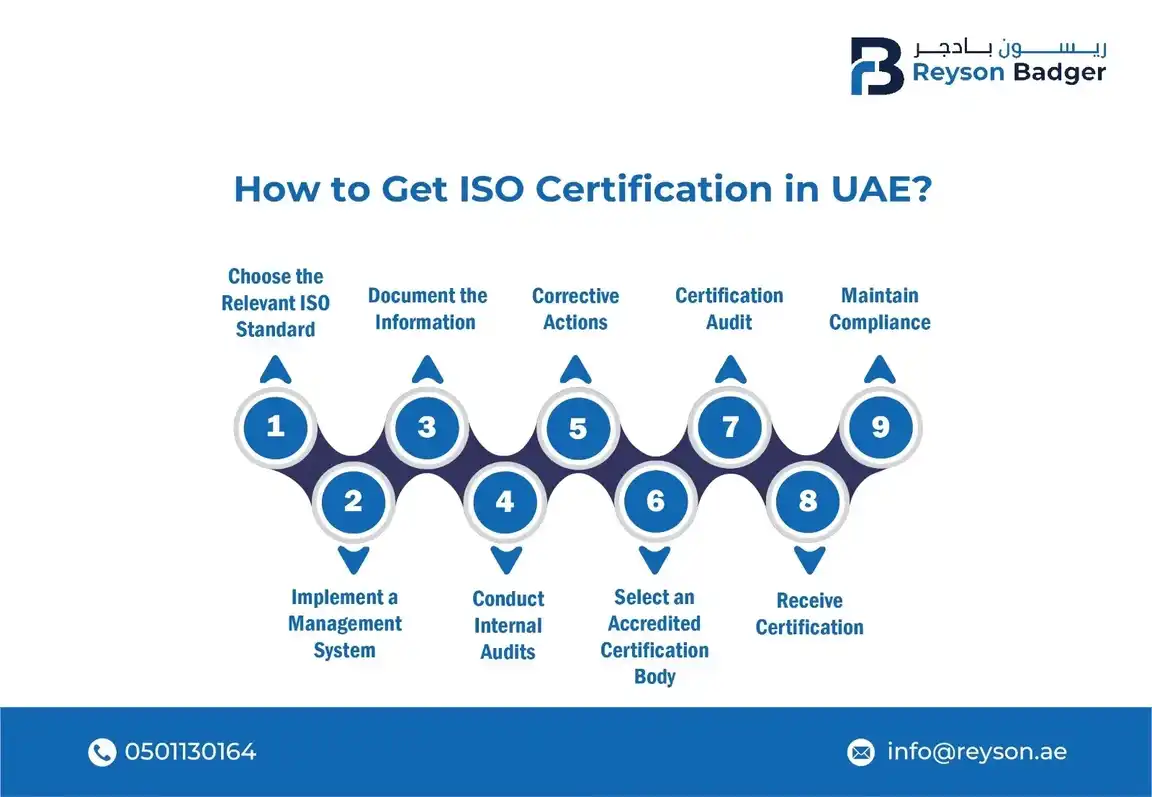
Whichever standard is used, the certification process follows a similar pattern and includes a gap assessment in relation to the standard in question, implementation of the processes required and documentation Internal audit, an external certification audit in two stages and ongoing checks to ensure the certificate.
The Cost-Per-Click of Pursuing Both
Businesses that really need two certifications could be concerned about doubling the cost and effort, but most find that using both certifications together, in the use of an integrated auditor program through the same certification agency, lowers administrative overhead in comparison when running two completely separate non-related certification initiatives at different dates.
Common Mistakes Businesses Make when it comes to This Decision
It is common to follow ISO 45001 purely because a competitor has it without first fully assessing whether the risk to safety of workers is an important aspect of the business's own operations, or, similarly, pursuing ISO 22000 based on assumption rather than a genuine job requirement for food safety within the company. A fair assessment of actual operational risk, in contrast to competitor behaviour, often results in a better decision.
Getting Expert Input Before Committing
In light of how distinct these two standards really are, companies who aren't sure which one applies to them benefit considerably in a preliminary consultation with any certification body, or consultant prior to making a commitment to either as a short meeting to discuss the scope beforehand can help avoid a considerably more expensive and lengthy lapse later into the process.
The Facts to Consider for UAE Businesses
Instead of treating ISO 45001 and ISO 22000 as two different options to choose between, the better formulation is to see them as completely separate risk categories that just happen each to be relevant for a specific organizations, but not all. A clear assessment of your own operational risk profile, rather than looking at what comparable-sounding competitors have been doing, is the most secure way to reach the right decision.
Participation of Frontline Staff in the Decision
Frontline personnel, whether on a construction site or in the food production plant, usually have the most precise grasp of where real risk to food handling and safety actually lie. Involving them in the initial risk assessment of the standard process, rather than accepting certification as just a business-related exercise, will develop a more reliable and real-time management system.
Making the decision among ISO 45001 and ISO 22000, or recognising the genuine necessity for both, comes down to a thorough assessment of your business's actual risk exposure instead of believing that the two standards can be used interchangeably to address the same issues. Whichever standard or combination of standards will ultimately be applicable to your business The goal for all of them is the same: establishing the best, most secure and reliable operation rather than simply having a certificate issued to meet some external requirement. This is a decision that doesn't need being made in isolation from a single conversation with a knowledgeable consultant who is familiar with both standards can usually clarify the right path within one meeting. Making this decision well in advance avoids considerable wasted time and expenses later in the certification process. A clear and objective look at actual procedures, rather than assuming is the most effective starting point each time. That single clarifying step often keeps you from months of unneeded confusion in the future. Accurateness here will pay dividends through the rest aspects of your process. View the top rated ISO Certification Dubai for more advice.
